


How to Start BJJ Safely as a Complete Beginner

Your first Brazilian Jiu-Jitsu class may look intimidating from the door. People are drilling takedowns, working from the ground, and moving with a level of comfort that takes time to build. The good news is that you do not need to be fit, flexible, tough, or experienced to start BJJ safely. You need a well-run academy, attentive coaching, and the willingness to learn at a pace that makes sense for your body.
BJJ is physically demanding, but it should never be a trial by fire. A quality beginner experience teaches you how to move, communicate, fall, tap, and train with partners before asking you to handle harder rounds. That structure is what turns a challenging martial art into a sustainable practice for adults, teens, and children.
How to Start BJJ Safely at the Right Academy
Safety begins before you step on the mats. The school you choose matters as much as the techniques you learn there. Look for classes with a clear beginner pathway, qualified instructors who actively supervise training, and a culture where experienced students help newcomers rather than try to prove something against them.
A good academy does not throw a first-day student into intense sparring without guidance. You should expect an introduction to the space, basic mat rules, warm-up movements, and a technique taught in manageable steps. During partner drills, coaches should be available to correct positioning and make sure people are working appropriately for their size and experience.
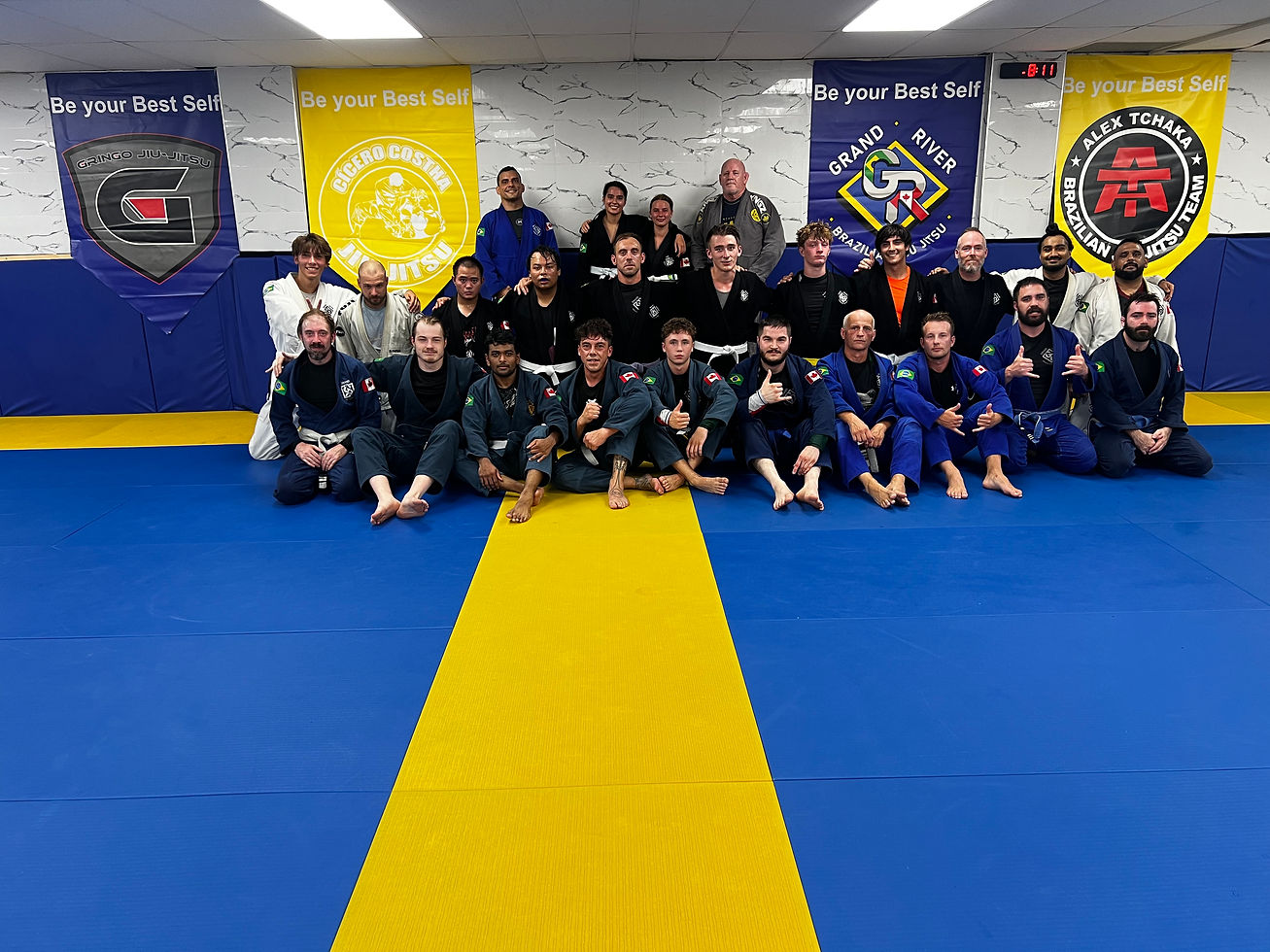
At Grand River Brazilian Jiu Jitsu, training is led by Cicero, a third-degree black belt with more than 20 years of experience. That level of leadership matters because safe instruction is not just about knowing techniques. It is about knowing when to simplify them, when to slow a student down, and how to create an environment where people can improve with confidence.
When visiting a school, pay attention to the atmosphere. Are people respectful when they train? Do partners check in with each other? Are beginners encouraged to ask questions? A welcoming room is not a soft room. It is a room where people can train seriously without feeling pressured to take unnecessary risks.
Tell Your Coach What Your Body Needs
You do not need to arrive in perfect shape. Many people begin BJJ while returning to exercise after years away, managing a busy work schedule, or simply looking for an alternative to the gym. But you do need to be honest about injuries, mobility limits, medical conditions, or concerns that could affect training.
Let your coach know if you have a sore knee, a previous shoulder injury, back pain, asthma, or any other relevant issue. If you are recovering from an injury or have been advised to limit physical activity, speak with an appropriate health-care professional before beginning. Your coach can often offer modifications, but they need the information to help you make good decisions.
The same applies to your training partner. A simple comment such as, “My right shoulder is sensitive, so please let me tap early,” helps set expectations. Clear communication is part of martial arts maturity, not a sign of weakness.
For parents, make sure the instructor knows about any physical needs or learning considerations your child may have. Kids classes should be age-appropriate, structured, and focused on skills such as listening, body control, respectful behaviour, and safe movement. Children do not need to be fearless to begin. They need to feel supported enough to participate.
Learn to Tap Early and Without Ego
The tap is one of the most valuable safety tools in BJJ. It tells your partner to release a submission or stop the movement immediately. You can tap your partner, your own body, or the mat. If your hands are not free, use your voice and say “tap” clearly.
A common beginner mistake is waiting too long because they want to escape, do not want to interrupt the round, or are unsure whether a position is dangerous. When in doubt, tap. There is no prize for enduring pressure on a joint or fighting through a choke when you are new to the sport.
Tapping is how you protect your body and return to train tomorrow. It also helps you learn where the boundaries are. Over time, you will recognize earlier when a position is becoming difficult and develop better escapes. That progress only happens when you train consistently, not when you turn every round into a test of toughness.
You also have a responsibility when applying a technique. Use control. Give your partner time to tap. Release right away when they do. BJJ works because of leverage and positioning, which means it does not require explosive force to be effective. Controlled practice makes learning safer for everyone.
Choose Training Partners Who Help You Learn
Your partner can make a major difference in your first months of BJJ. Whenever possible, train with people who are calm, technical, and aware of their own strength. More experienced students are often excellent partners because they can adjust their pace, guide movement, and let you practise without creating a chaotic exchange.
Size can matter, especially at the beginning, but it is not the only factor. A larger, experienced partner may be safer than someone your own size who moves unpredictably. If a pairing does not feel right, ask the coach for help. You are not being difficult by requesting a suitable partner.
During positional sparring or live rounds, set the pace before you begin. Tell your partner that you are new and ask to keep it technical. Most people will understand immediately. If someone is moving too hard, cranking submissions, ignoring taps, or making you feel unsafe, stop and speak to the instructor. A strong academy takes those concerns seriously.
Build Intensity Gradually
The fastest way to make BJJ harder than it needs to be is to try to win every exchange with strength. Beginners often hold their breath, grip too tightly, and scramble at full speed because everything feels unfamiliar. This is normal, but it is exhausting and can increase the chance of awkward movements.
Start with the goal of learning rather than dominating. Focus on posture, balance, breathing, and the specific position your coach is teaching. If you get stuck underneath someone, breathe and work through the options you have practised. If you need a moment, tap, reset, and begin again.
Two or three classes per week is a strong starting point for many adults, although the right schedule depends on your current fitness, recovery, and other commitments. One consistent class is better than several hard sessions followed by a long break. Teen and kids programs should also allow students to develop confidence progressively instead of making them feel overwhelmed.
Expect some muscle soreness as your body adapts to new movements. Sharp pain, joint pain, dizziness, or symptoms that feel unusual are different. Stop training and let a coach know. Listening to your body is how you stay on the mats long enough to enjoy the real benefits of BJJ: improved fitness, focus, resilience, self-defence awareness, and confidence earned through practice.
Keep the Mats and Your Gear Clean
Hygiene is a shared responsibility in any grappling academy. BJJ involves close contact, so clean habits protect you and your training partners. Come to class clean, keep your fingernails and toenails trimmed, cover cuts properly, and wear clean training clothing for every session.
Wash your gi or no-gi clothing as soon as possible after training. Do not leave damp gear in a closed bag overnight, and clean any protective equipment you use. Wear sandals or clean footwear off the mats rather than walking barefoot through washrooms or outside areas and then stepping back onto the training surface.
If you have a contagious skin condition, flu-like symptoms, or an open wound that cannot be securely covered, take time off until it is safe to return. Missing a class is frustrating, but protecting your training community is an act of respect.
Safety Includes the Mindset You Bring
Starting BJJ safely is not only about avoiding physical injury. It is also about giving yourself permission to be new. You will forget steps, end up in uncomfortable positions, and sometimes feel like everyone else understands more than you do. Every experienced practitioner has been there.
Measure your progress in small wins: remembering a warm-up movement, staying calm under pressure, using a technique with better timing, or showing up after a difficult day. These are the moments that build discipline and confidence beyond the mats.
Book a beginner class, arrive a few minutes early, and let your coach know it is your first time. You do not have to prove that you belong before you begin. With patient instruction, respectful partners, and a steady approach, your first step onto the mats can become the start of a stronger, more confident routine.
Comments