


Why Martial Arts for Shy Children Can Help

A shy child does not need to become the loudest person in the room to become more confident. They need a place where they can try, make mistakes, learn a skill, and be respected for showing up. That is why martial arts for shy children can be such a meaningful after-school activity. In the right class, confidence is not demanded. It is built one small success at a time.
Brazilian Jiu-Jitsu is especially well suited to children who are quiet, cautious, or slow to warm up in new groups. It gives them a clear structure, practical goals, and a supportive way to practise alongside others without the pressure to perform for an audience.
Why shyness is not a barrier to martial arts
Many parents worry that a shy child may be intimidated by a martial arts class. That can happen if the environment is overly aggressive, disorganized, or focused only on who wins. A well-run children’s BJJ program should feel different. Children learn routines, listen to clear instruction, partner safely, and develop skills at their own pace.
Being shy is not a weakness that needs fixing. Some children simply prefer to observe before joining in. Others need more time to trust a coach, understand a new activity, or get comfortable with physical proximity. Good instructors recognize that adjustment takes time and create a consistent environment where children know what to expect.
Jiu-Jitsu also rewards patience and problem-solving. A child does not have to be the fastest, strongest, or most outspoken student to succeed. They can pay attention, practise a movement carefully, and find a technique that works. For many quiet children, that is a powerful discovery.
How Brazilian Jiu-Jitsu builds confidence without forcing it
Confidence is often misunderstood as boldness. Real confidence is the feeling that comes from knowing, “I can handle this.” Children earn that feeling through repeated effort.
In a Brazilian Jiu-Jitsu class, progress is visible. A child may begin by learning how to fall safely, move on the ground, maintain balance, or escape from underneath a training partner. Later, they learn positions, controls, and age-appropriate self-defence concepts. Each skill gives them evidence that they are becoming more capable.
That process matters for shy children because it does not rely on public speaking, being chosen first, or scoring the most goals. They can build confidence through action. They may start by quietly following a drill, then volunteer to demonstrate a movement months later. Both are signs of growth.
Sparring, when introduced safely and appropriately, can also help. It teaches children that a difficult moment is not a disaster. They can get stuck, pause, think, use a technique, and try again. Learning to stay calm under pressure carries into school, friendships, and unfamiliar situations.
Small wins create lasting change
Parents often notice the changes outside the academy before their child notices them in themselves. A child may stand a little taller, speak more clearly to an adult, or be more willing to attempt something new. They may also become better at handling a frustrating homework assignment or a disagreement with a sibling.
These outcomes do not appear after one class. They grow from consistent practice, supportive coaching, and the experience of overcoming manageable challenges. The goal is not to change a child’s personality. It is to help them feel secure in who they are.
Social skills with a clear purpose
Traditional team sports can be excellent for some children, but they are not every child’s best fit. A shy child may struggle when there is constant competition for the ball, little individual instruction, or pressure to speak up quickly in a busy group.
BJJ offers social interaction with a clear purpose. Children work with partners to practise a specific technique. They learn how to take turns, listen, ask permission, communicate respectfully, and look after their training partner. The focus is not on making instant friends. It is on training together well. Friendships often follow naturally.
This matters because it removes some of the uncertainty that makes social settings hard. Instead of wondering what to say, children know the task: practise the drill, use control, reset, and encourage each other. Over time, familiar faces and shared effort can turn a class into a trusted community.
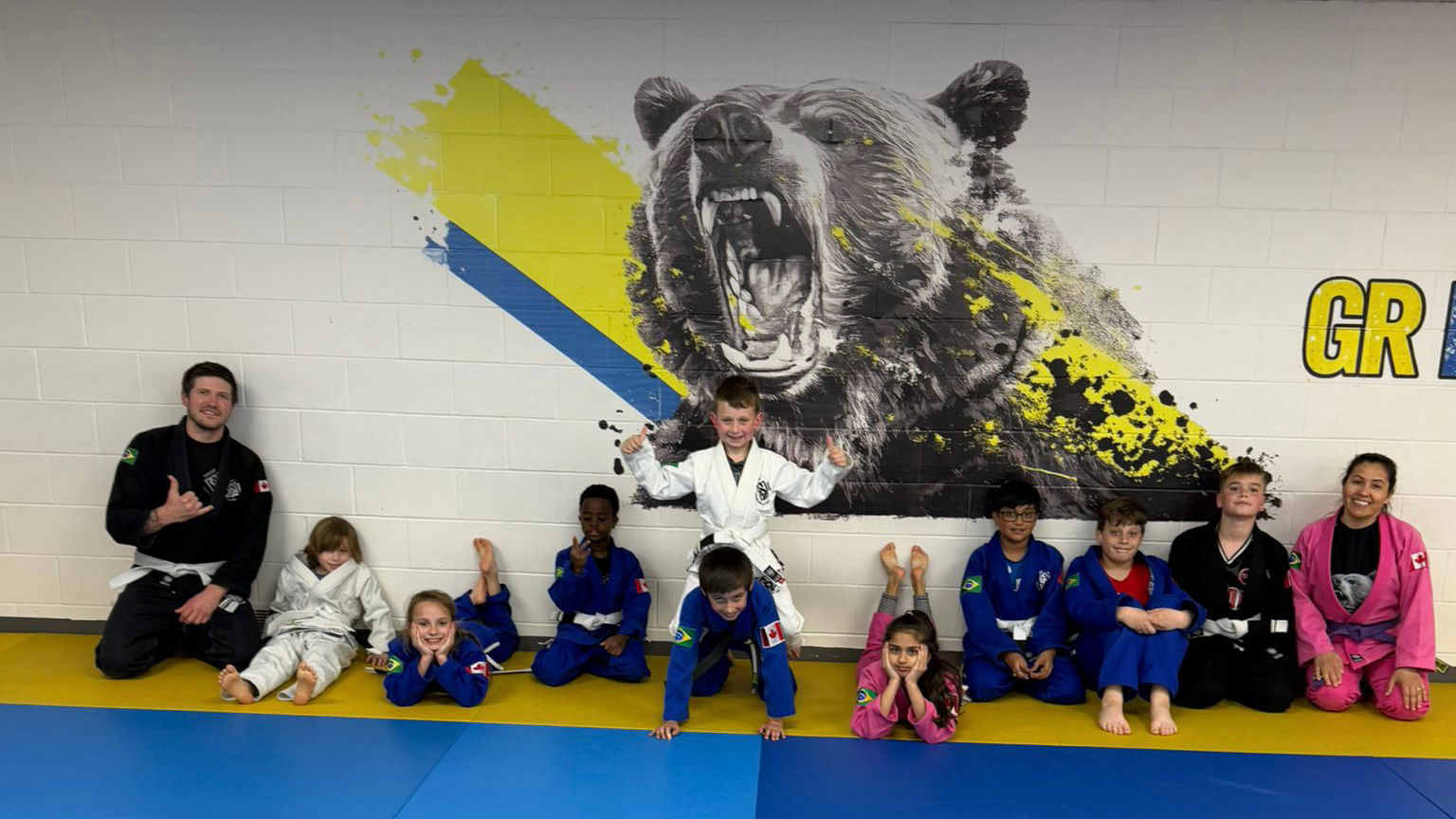
At Grand River Brazilian Jiu-Jitsu, children train in structured, age-appropriate classes led by experienced instructors who understand that every student arrives with a different comfort level. The standard is effort, respect, and steady improvement, not being the loudest child on the mat.
What parents should look for in martial arts for shy children
Not every martial arts program creates the same experience. Before enrolling, parents should watch how instructors speak to children, how students partner up, and how mistakes are handled. A child who is nervous about trying something new needs firm guidance, but they also need reassurance.
Look for a class with clear routines. Knowing how class begins, where to line up, when to practise, and what happens at the end helps children settle in. Consistency is calming, especially during the first few weeks.
Pay attention to the culture as well. Children should be taught that training partners are not enemies. BJJ is physically close and technically challenging, so safety, hygiene, consent, and control must be part of every class. A quality academy does not use embarrassment or intimidation as motivation.
It is also worth asking how new students are introduced to sparring. Some children are ready quickly; others need more time to understand the basics and build trust. There is no benefit in rushing a child into an experience that overwhelms them. The best programs challenge children while keeping the challenge appropriate.
Helping your child through the first few classes
The first class can feel big for a shy child, even if they are excited at home. Arriving a little early can help them see the space before it gets busy and meet the instructor without a crowd around them. Let them know they do not need to be perfect or make a new friend immediately. Their job is simply to attend, listen, and try.
Avoid promising that they will love every minute. A more honest message is that new things can feel uncomfortable at first, and that feeling usually gets easier with practice. Give them time to process after class. Rather than asking, “Did you have fun?” try asking what they learned, which movement felt easiest, or what they would like to practise next time.
Consistency is usually more useful than pressure. If a child is safe but hesitant, encourage them to return for a few classes before deciding whether the program is right for them. Initial nerves are normal. On the other hand, listen carefully if they raise a specific concern about safety, bullying, or how they are being treated. A supportive academy will welcome that conversation.
The practical value of learning self-defence
Parents often choose martial arts because they want their child to have practical self-defence skills. That is a worthwhile goal, but self-defence is more than a collection of moves. For children, it includes awareness, boundaries, confidence, and the ability to seek help from a trusted adult.
Brazilian Jiu-Jitsu teaches children how to manage distance, control their bodies, and respond calmly if someone grabs or pushes them. Just as important, it reinforces the idea that physical skills are for protection, not for starting conflict. A child who feels more capable is often less likely to feel powerless or react impulsively.
For a shy child, that sense of capability can be especially valuable. They do not need to become confrontational. They learn that they can use their voice, set a boundary, and act with purpose when needed.
A place to grow without pretending to be someone else
The best martial arts experience does not turn quiet children into different people. It gives them room to become more secure, resilient, and comfortable participating in the world around them. Some will become more talkative. Others will remain naturally reserved while gaining the confidence to take up space when it matters.
If your child has been watching from the sidelines, a patient first class may be the right next step. Let them step onto the mat, learn one technique, and discover that courage can be quiet.
Comments