


When Should Kids Start BJJ? A Parent Guide

A child does not need to be naturally athletic, fearless, or already interested in combat sports to begin Brazilian Jiu-Jitsu. When parents ask, “when should kids start BJJ,” the better question is often whether their child is ready for a structured class where they can listen, move, try, make mistakes, and try again.
For many children, that point arrives around age six. This is why well-designed kids’ BJJ programs commonly begin at this age: children are usually ready to follow group instruction, work safely with a partner, and begin building the attention and body awareness that Jiu-Jitsu requires. Still, age is only one part of the decision. The quality of coaching, class structure, and your child’s individual temperament matter just as much.
When Should Kids Start BJJ? Start With Readiness
Brazilian Jiu-Jitsu is a close-contact martial art, but a good children’s program is not adult training made smaller. Kids learn through movement, games, drills, basic positions, controlled partner work, and clear routines. The goal is to help them develop skills while learning how to train with care and respect.
A child is often ready to start BJJ when they can participate in a class setting for a reasonable period, respond to simple safety instructions, and practise taking turns with others. They do not need perfect focus. In fact, focus is one of the skills they can develop through training. They simply need enough willingness to engage, reset after distraction, and accept guidance from a coach.
Some children arrive at six eager and confident. Others are quiet, cautious, or reluctant to join an unfamiliar group. Both can do very well. A shy child may benefit from the predictable routines and small wins of martial arts, while an energetic child may learn how to direct their energy with more control. Readiness is not about having a certain personality. It is about having a program that meets the child where they are.
Why Ages 6 to 11 Are a Strong Time to Begin
The elementary-school years are an excellent window for developing foundational habits. Children are learning how to manage frustration, communicate with peers, follow through on commitments, and become more independent. BJJ gives those lessons a practical setting.
A technique may not work on the first attempt. A child may lose position during a drill. They may need to repeat the same movement several times before it feels natural. With the right coaching, those moments become valuable rather than discouraging. Kids learn that progress comes from paying attention, practising consistently, and staying calm when something is difficult.
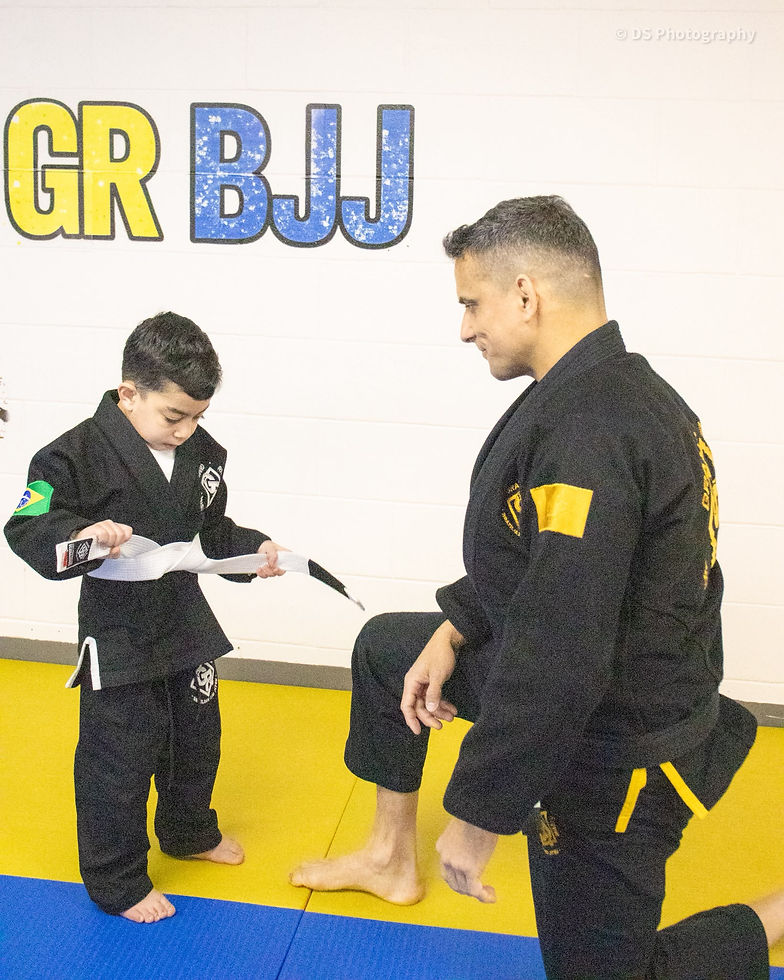
At Grand River Brazilian Jiu Jitsu, dedicated kids’ classes are designed for school-age students, including ages 6 to 10 and 7 to 11. That age-appropriate structure matters. Children need instruction that is clear, active, encouraging, and scaled to their physical and emotional development. They also need coaches who can balance high standards with patience.
Beginning during these years can also give children a healthy after-school routine. Rather than another activity centred on screens or sitting still, BJJ asks them to move with purpose, solve problems, and connect with teammates. Many parents value that combination of fitness, confidence, and social development.
Signs Your Child May Benefit From BJJ Now
You do not need to wait for a child to ask for martial arts by name. Sometimes a parent notices a need first. Perhaps their child has plenty of energy but struggles with self-control. Perhaps they are hesitant in new social settings, have trouble bouncing back after setbacks, or would benefit from an activity that rewards effort more than natural speed or strength.
BJJ can be particularly useful for children who do not connect with traditional team sports. There is still a team atmosphere, encouragement from classmates, and a shared goal of improving together. But progress is personal. A child can work on their own coordination, confidence, and technique without the pressure of being the fastest scorer or the most physically advanced player on the field.
It is also a constructive place to teach boundaries. Children learn that training partners deserve respect, that control matters, and that strength is not the same as roughness. They practise asking for help, responding to coaching, and recognizing when to stop. These are valuable skills on the mats and beyond them.
What a Safe First BJJ Class Should Look Like
Parents are right to ask about safety before enrolling. BJJ includes grappling, so the instructor’s approach is central to a positive experience. In a quality kids’ class, students are supervised closely, grouped appropriately, and taught how to move safely before they are asked to perform more challenging skills.
A first class should feel organized, not chaotic. Coaches should explain expectations in language kids understand, demonstrate techniques clearly, and maintain a respectful environment. Students should be encouraged to train with control, not to overpower one another. Sparring or live movement, when included, should be structured for the group’s age and experience level.
The best programs also recognize that every child develops differently. Size, confidence, coordination, and learning style can vary widely within the same age group. A skilled coach adjusts the challenge without lowering the standard. Children should leave class feeling that they worked hard and learned something, not that they had to prove they belonged.
Is There Such a Thing as Starting Too Late?
Not for kids, teens, or adults. While early elementary school is a natural time to begin a children’s program, BJJ does not have a narrow starting window. A child who begins at nine, 11, or in their teen years can still build excellent skills and gain the same core benefits.
Starting later may come with a short adjustment period. Older beginners sometimes compare themselves to classmates who have trained longer. This is where the academy culture matters. Good coaching brings the focus back to individual progress: showing up, learning the next detail, and improving from one class to the next.
Parents should avoid treating BJJ as a race to a belt or a test of toughness. The child who starts later but enjoys training, listens carefully, and develops consistency may gain far more than the child who begins early but feels pushed into an activity they do not enjoy.
How to Help Your Child Have a Good Start
The first few weeks set the tone. Let your child know that they do not need to be perfect, know every move, or make an instant best friend. Their job is simply to attend, listen, and give an honest effort. It is normal to feel unsure before the first class, especially in a new environment.
Try not to over-coach from the sidelines. Coaches will give technical instruction, and children often gain confidence when they can solve small challenges independently. After class, ask open questions such as, “What was the most fun part?” or “What did you practise today?” These questions invite conversation without turning training into a performance review.
Consistency helps more than intensity. One regular class each week can become an anchor in a child’s routine, while additional training may make sense as their interest grows. Give them enough time to move past the unfamiliar stage. Most children need several classes to learn the rhythms of the room, remember names, and feel comfortable participating.
Choosing BJJ for the Right Reasons
BJJ can help children become fitter and more capable, but its value reaches beyond physical activity. It gives them repeated opportunities to practise patience, respect, courage, and resilience in real time. They learn that a difficult moment is not a reason to quit. It is a chance to breathe, listen, and try a better approach.
The right time to begin is not when a child has every skill already in place. It is when they have a supportive environment in which those skills can grow. A welcoming trial class can give your family a clearer answer than any age chart: watch how your child responds to the coaching, the movement, and the community, then let their next step be guided by curiosity and steady encouragement.
Comments